Sol&Aura
Multi-cuisine restaurant mockup with a dynamic, data-driven menu platform.
- Client
- Sol&Aura — multi-cuisine food hall (concept)
- Role
- Design & build
- Timeline
- 3 weeks
- Year
- 2026
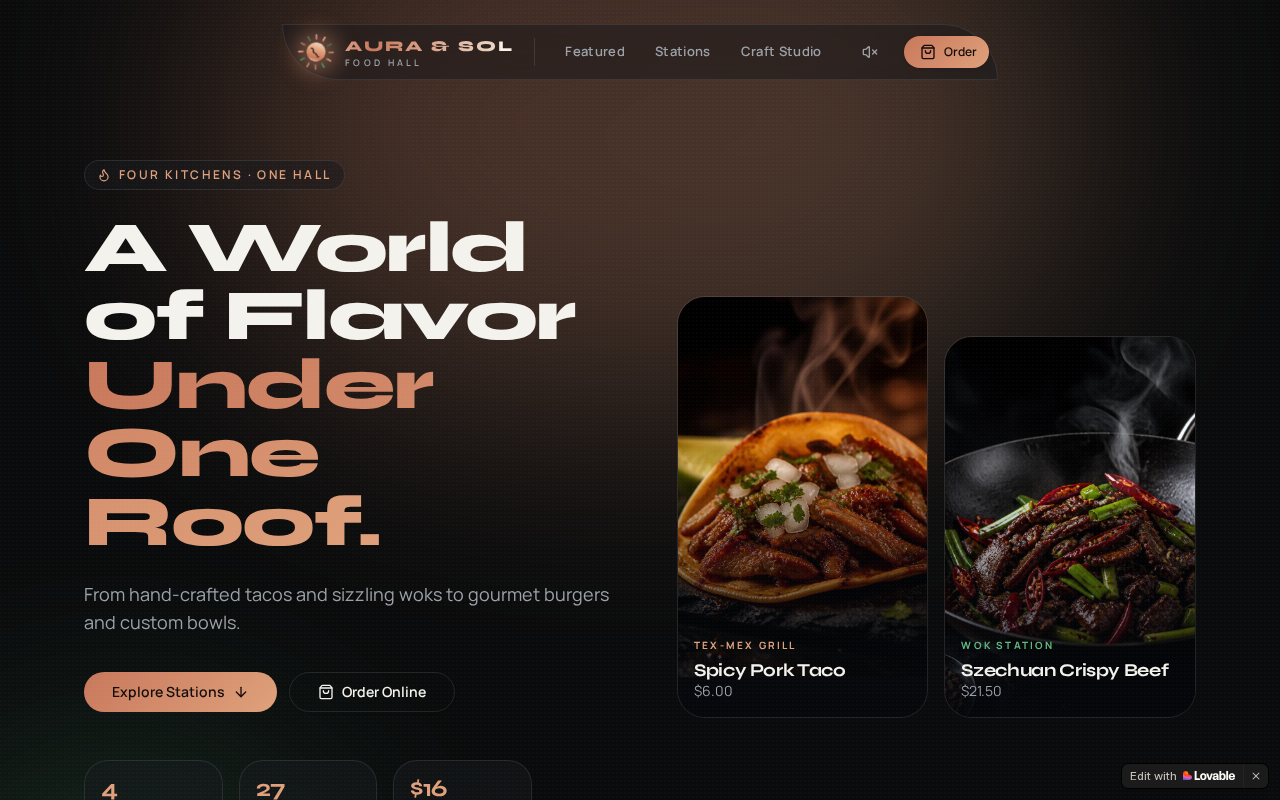
Device · 390 × 844Idle
Sol&Aura — responsive buildOpen ↗
Some hosts block embedding. If the frame stays blank, open the site directly.
01
Overview
A food hall concept where several cuisines share one venue. The menu is data-driven — kitchens, sections, dishes, dietary tags and prices all render from one structured source, so a menu change never becomes a page rebuild.
02
The problem
Multi-cuisine venues publish PDF menus that go stale immediately, are unreadable on a phone, and hide dietary information exactly where diners need it most.
03
Approach
- 01Structured the menu as nested data: kitchen → section → dish, each with price, description and dietary tags.
- 02Built a sticky kitchen switcher so a diner can jump between cuisines without losing their place.
- 03Designed dish cards for phone-first scanning: name, price and tags legible at a glance.
- 04Added reservation and direct-order CTAs anchored to the visible section.
04
Strategy & UX decisions
- A sticky kitchen switcher replaces endless scrolling — on a phone, navigation is the menu's real UX problem.
- Dish cards are typeset for one-second scanning: name, price, dietary tag, in that order of contrast.
- The whole menu renders from nested data, so a price change is one line rather than a redesign.
05
Challenges
- Navigating a long multi-cuisine menu on mobile without endless scrolling.
- Dietary tags had to be visually distinct but not overpower the food photography.
- Keeping price formatting consistent across kitchens with different price bands.
06
Learnings
- →Menus are a data problem; treating them as layout is why restaurant sites rot.
- →A sticky section switcher does more for menu usability than any animation.
- →Concept builds are strong portfolio pieces when the data model is genuinely production-ready.
07
Tech & tooling
- React
- TypeScript
- Tailwind CSS
- Nested menu data model
- Sticky section navigation
08
Outcome
- Whole venue menu browsable in seconds on a phone.
- Dish, price and dietary edits are one-line data changes.
- Reusable menu engine that ports to any hospitality client.
Next case study · Ref 004
Syncora